
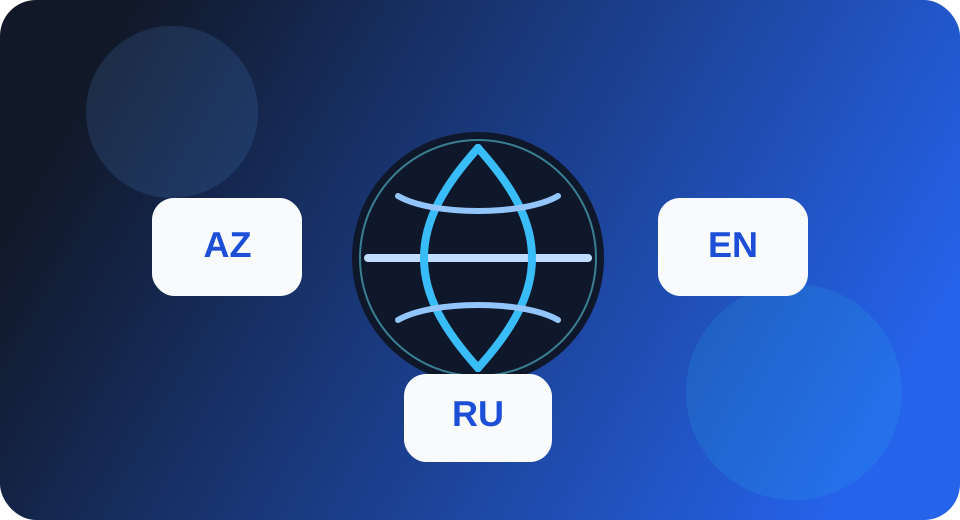
A multilingual website is not just a translated interface. Each language version needs its own structure, logic and user expectations to be handled properly.
At Emblem.az we solve multilingual work on both the technical and content side so the site stays manageable as it grows.
What we do
We treat multilingual websites as connected systems rather than isolated copies.
Language architecture
We plan URLs, menus and page hierarchy for each language version.
SEO coordination
We align hreflang, canonical logic and internal linking so language versions support rather than confuse indexing.
Audience-sensitive messaging
We adapt service framing to fit the tone and expectations of each language audience.
Who this service is for
This is especially useful for businesses serving more than one market.
- Companies targeting Azerbaijani, Russian and English-speaking audiences
- Brands needing a more credible international presentation
- Businesses running campaigns across multiple regions
- Teams that want scalable multilingual growth rather than a patchwork setup
Our process
Language planning
We decide which content belongs in which language and how navigation should behave.
Content adaptation
We refine headings, CTAs and service messaging for each audience.
Technical validation
We verify hreflang, canonical and language-link integrity before launch.
What you get
The result is a more professional multilingual presence that stays organized over time.
Why Emblem.az
The biggest multilingual risk is structural chaos later. We solve that early.
- We account for business tone, not only linguistic translation
- We build the technical SEO layer into the structure from the start
- We make language switching logical and easy to use
- We keep future content expansion in mind while building the base
Useful articles
When articles are available for this service, they appear here automatically.
What multilingual websites bring to business
A multilingual website can improve trust, expand demand and help businesses communicate more accurately with different audiences.
What to consider for Azerbaijani, Russian and English website versions
Three language versions should be planned as parallel experiences, not as one text copied into three menus.
What is multilingual SEO and how to build it
Multilingual SEO helps search engines understand which language version belongs to which audience and query intent.
Frequently asked questions
These answers cover the most common commercial and process questions clients ask about this service.
Can a new language be added later?
Yes. A well-planned multilingual structure makes later expansion much easier and safer.
Does every language version need identical copy?
The meaning should remain aligned, but messaging emphasis can and should adapt to the audience.
Why does hreflang matter?
It helps search engines understand which language version should be served to which audience.
Are multilingual websites harder for SEO?
They can be if the structure is poor. With a clean architecture, they become a strong advantage.
How is the final price determined?
The final price depends on scope, page count, functionality, languages, and any special integrations. The service page provides a strong starting point, while the final scope is confirmed during planning.
Is installment-style payment available?
Yes, depending on the project, installment-style payment may be available. Campaign pricing applies only to full-payment orders, while installment-style payment uses the standard package or agreed standard project price.
Can I get support after launch?
Yes. Depending on the type of project, we can continue with technical support, updates, and further development after launch.